



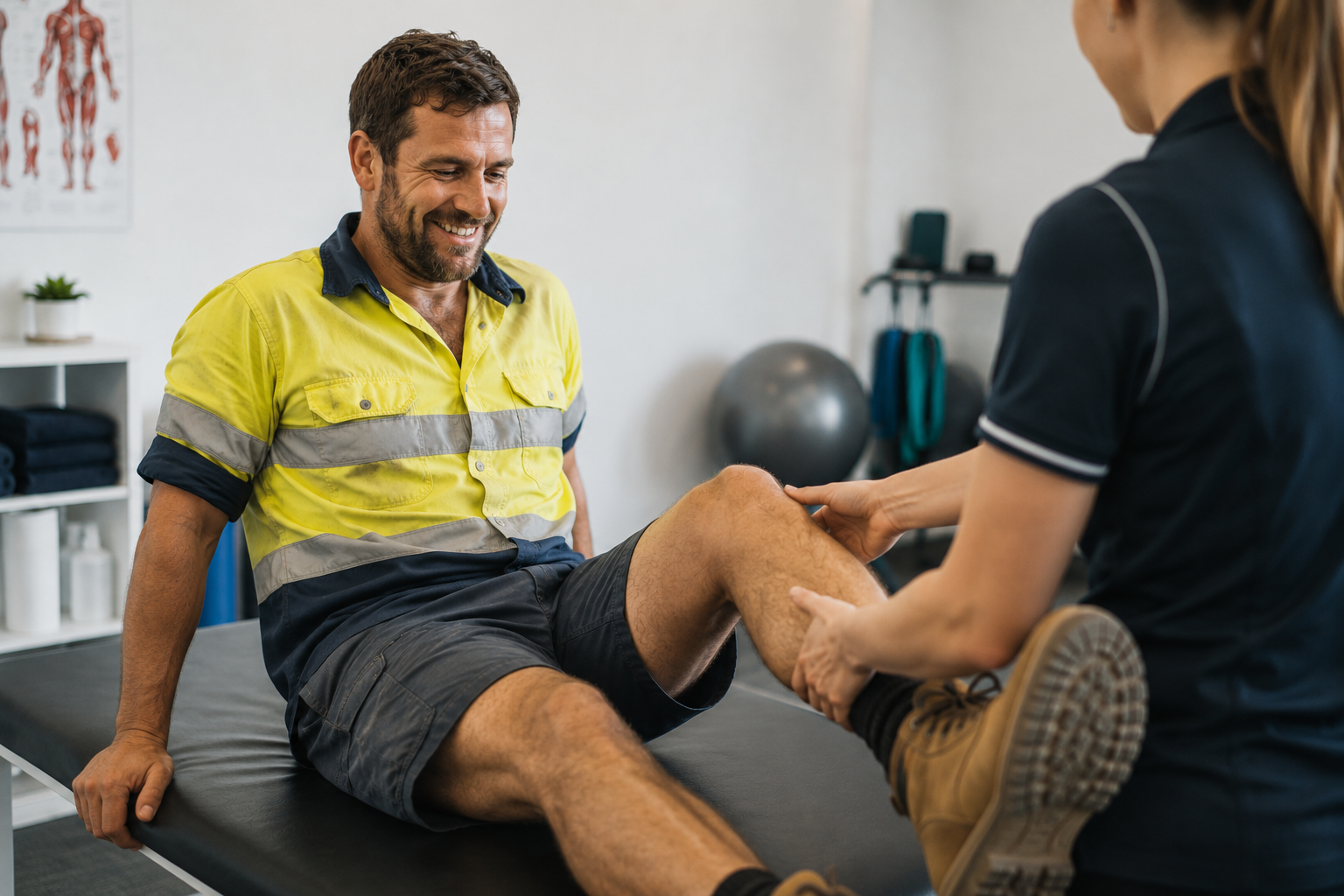
11 Aug National Tradies Health Month: Keeping Tradies Healthy On and Off the Job

By Chloe Prudden – Physiotherapist
August is National Tradies Health Month recognising the hardworking Australians who build, repair and maintain our homes, businesses and communities.
Whether you’re a carpenter, tiler, concreter, plumber, electrician, landscaper, painter or mechanic – your body is one of your most important tools.
The physical demands of trade work – including repetitive lifting, prolonged kneeling and uncomfortable postures, working overhead, carrying heavy loads and using vibrating hand tools – place tradies at increased risk of musculoskeletal injuries.
These injuries often develop gradually from repeated strain or sustained awkward postures rather than a single incident, making early management essential to prevent ongoing pain and time away from work.
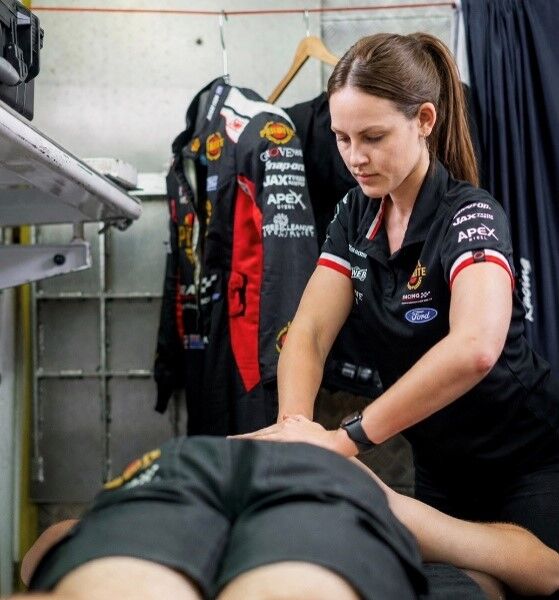
At our clinic, we work with patients working in many trades. We have had the privilege of working with mechanics both in local workshops and one of our Physios, Chloe, works in the high-performance environment of motorsport.
So whether you’re servicing everyday vehicles or performing rapid pit stops under race conditions, we understand the unique physical demands of the job and tailor rehabilitation and injury prevention programs to help you stay strong, recover efficiently, and keep performing at your best.
Tradie Spotlight: Mechanics
Mechanics are exposed to repetitive lifting, prolonged bending, kneeling, squatting, overhead work and sustained awkward postures.
Occupational health research has consistently found that these physical demands place mechanics at an increased risk of developing work-related musculoskeletal disorders, with the lower back, shoulders, neck and knees being among the most commonly affected body regions. Repetitive use of hand tools and forceful gripping can also contribute to elbow, wrist and hand injuries.
While acute injuries are not uncommon, many of these conditions develop gradually, meaning aches and stiffness are often ignored until they begin affecting work performance.
Early assessment and treatment can help prevent minor problems from becoming persistent injuries.
How physiotherapy can help
Physiotherapy is recommended as a first-line treatment for many musculoskeletal conditions. Rather than simply treating pain,
physiotherapists identify the underlying causes of injury and develop an individualised plan to improve strength, mobility and function.
Treatment may include:
- Comprehensive assessment and diagnosis
- Individualised exercise programs to restore strength and movement
- Manual therapy
- Education on workload management and recovery
- Advice on lifting techniques and workplace ergonomics
- Graduated return-to-work planning following injury.
Research consistently demonstrates that exercise therapy improves pain and function for common conditions such as low back pain, rotator cuff-related shoulder pain and lateral elbow tendinopathy experienced by tradespeople.
Stay healthy for the long haul
Working through pain is common in the trades, but it doesn’t have to be.
Addressing symptoms early can help reduce recovery time, minimise time away from work and keep you performing at your best.
If you’re a tradie experiencing persistent aches, stiffness or pain, our physiotherapists at Everton Park Sports & Spinal Physiotherapy can help you recover, prevent future injuries and keep doing the work you love.
Call 3354 1819 or book online to see a physiotherapist for your assessment and individualised management and recovery plan.

Chloe Prudden
Physiotherapist
Chloe graduated from Griffith University with a Bachelor of Physiotherapy (First Class Honours). She is passionate about providing tailored care to help people achieve their health, recovery, and performance goals.
With experience across sport, emergency healthcare and private practice, Chloe has worked with various teams including in V8 Supercars motorsport, supporting injury prevention, rehabilitation, recovery, performance, and overall wellbeing.
Chloe takes a holistic, tailored and evidence-based approach to care, combining education and advice, hands-on treatment and exercise rehabilitation to support each individual’s goals and lifestyle.
References
Abaraogu, U. O., Ezema, C. I., Igwe, S. E., Egwuonwu, A. V., & Okafor, U. C. (2016). Work-related back discomfort and associated factors among automotive maintenance mechanics in Eastern Nigeria: A cross sectional study. Work (Reading, Mass.), 53(4), 813–823. https://doi.org/10.3233/WOR-162247
Tamene, A., Mulugeta, H., Ashenafi, T., & Thygerson, S. M. (2020). Musculoskeletal Disorders and Associated Factors among Vehicle Repair Workers in Hawassa City, Southern Ethiopia. Journal of environmental and public health, 2020, 9472357.
Hayden, J. A., Ellis, J., Ogilvie, R., et al. (2021). Exercise therapy for chronic low back pain. Cochrane Database of Systematic
Reviews, (9).
Lin, I., Wiles, L., Waller, R., et al. (2020). What does best practice care for musculoskeletal pain look like? Ten evidence-based
recommendations from global experts. British Journal of Sports Medicine, 54, 79–86.
No Comments