



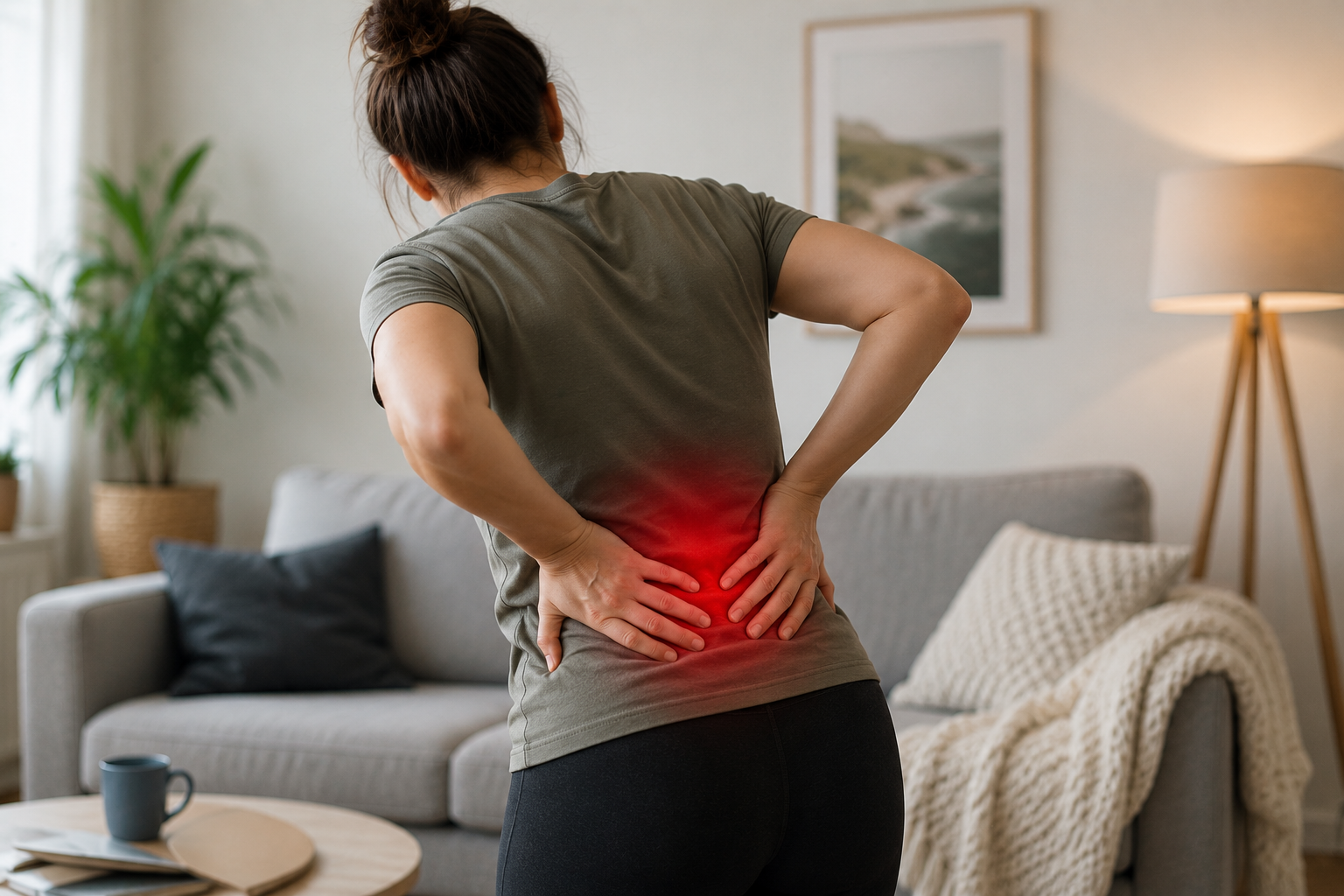
17 Jul Why Low Back Pain Often Feels Worse in Colder Months — A Clinical Perspective

By Julian Gurizzan - Physiotherapist
At Everton Park Sports & Spinal Physiotherapy, we see an increase in low back pain presentations during the colder months of the year. While it is commonly attributed to temperature, current evidence does not support cold weather as a direct cause of spinal pain.
Instead, seasonal changes in movement, load exposure, and daily activity levels are far more influential in how the back feels and functions.
Low back pain is now understood as a multifactorial condition, shaped by physical, psychological, and lifestyle factors rather than structural damage alone (Hartvigsen et al., 2018).
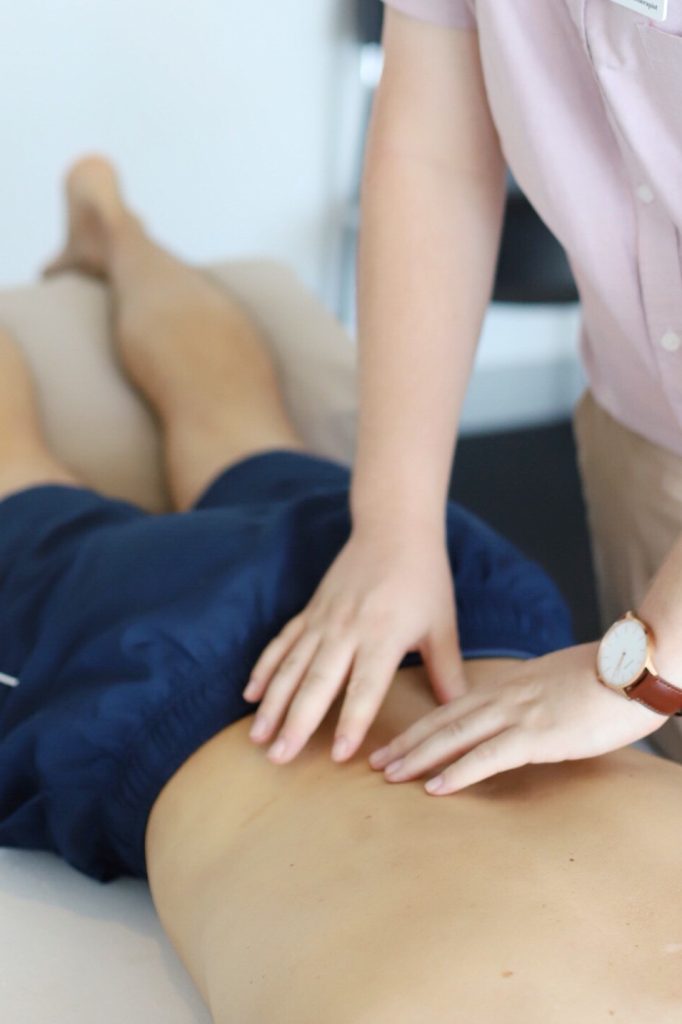
The Role of Physiotherapy: Assessment, Screening, and Clinical Clarity
A comprehensive physiotherapy assessment is central to the safe and effective management of low back pain.
One of the primary roles of the physiotherapist is to differentiate non-specific low back pain from rarer but more serious pathology, through targeted history and examination. This includes screening for red flag features such as:
- Cauda equina symptoms
- Progressive or significant neurological deficit
- Suspected fracture or recent trauma
- Infection or systemic disease indicators
- Unexplained weight loss or persistent night pain.
In the majority of presentations, these features are absent. This allows management to focus confidently on education, movement restoration, and graded return to load, rather than imaging or passive treatment approaches.
Just as importantly, physiotherapy provides clinical reassurance — helping patients understand that pain does not necessarily indicate tissue damage, and that the spine is robust and adaptable.
Contemporary Understanding of Low Back Pain
High-quality clinical guidelines from Australia and internationally are consistent in their recommendations for low back pain management.
Across the evidence base, the key principles are clear:
- Most low back pain is non-specific and benign in nature
- Serious pathology is uncommon
- Imaging is rarely indicated without red flags
- Early return to movement is associated with better outcomes
- Exercise and education are first-line interventions.
These recommendations are reflected in clinical guidelines including the Australian Clinical Care Standard and NICE guidelines, and supported by extensive clinical research (ACSQHC, 2022; NICE, 2016).
Research further confirms that exercise therapy improves pain and function in persistent low back pain, particularly when combined with education and progressive loading strategies (Hayden et al., 2021).
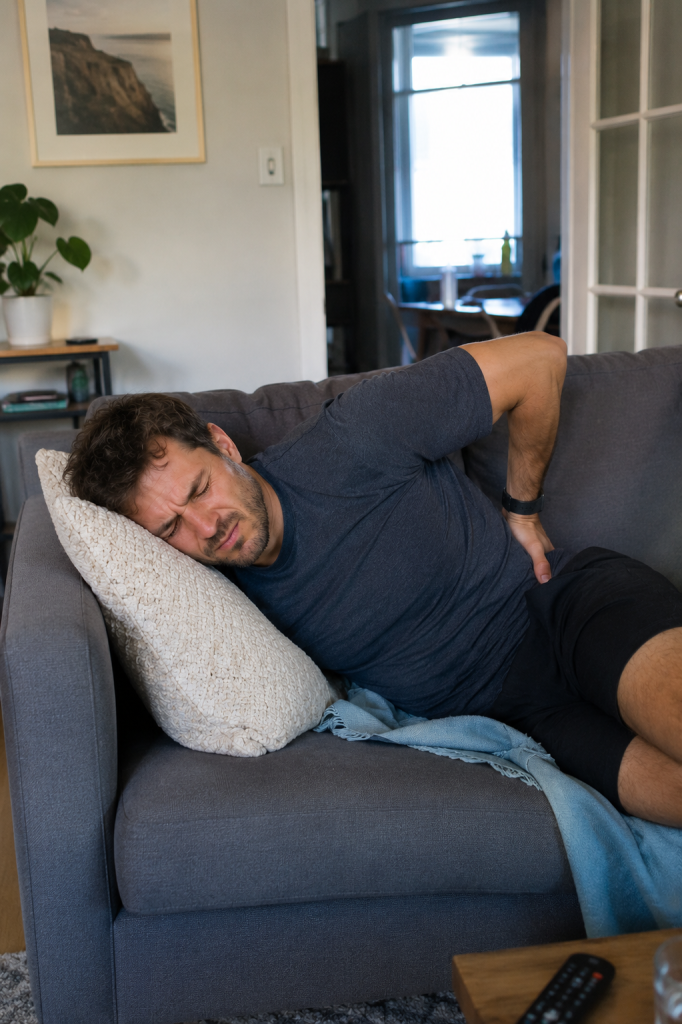
Why Symptoms Often Increase in Colder Months
The seasonal increase in symptoms is rarely related to temperature itself. Instead, it reflects predictable changes in behaviour and physical conditioning.
Common contributing factors include:
- Reduced incidental movement and daily step count
- Increased periods of prolonged sitting
- Reduced exposure to regular spinal loading
- Gradual decline in muscular capacity and conditioning
- Changes in sleep, stress, and recovery patterns.
Clinically, these factors contribute to a reduction in load tolerance and movement variability, which can increase symptom sensitivity without implying structural harm.
Sitting, Stiffness, and Movement Variability
Sitting is often misunderstood in the context of low back pain.
Sitting itself is not harmful. However, prolonged uninterrupted postures reduce variability in spinal loading, which can contribute to:
- Increased stiffness on standing
- Reduced muscular endurance over time
- Heightened symptom awareness in sensitised systems.
Clinical guidelines emphasise the importance of regular movement breaks and postural variation, rather than avoidance of sitting (ACSQHC, 2022).
Exercise as a Cornerstone of Management
Exercise remains one of the most consistently supported interventions for low back pain. Outcomes are best achieved when exercise is:
- Individualised
- Progressively loaded
- Focused on restoring capacity and confidence
- Combined with education and self-management
Research shows that resistance training, Pilates, motor control approaches, and aerobic exercise all provide similar benefit when appropriately prescribed and progressed (Hayden et al., 2021; Owen et al., 2020).
The key clinical principle is not exercise selection, but progressive exposure to load over time.

In Summary
An increase in low back pain during colder months is most often explained by changes in movement behaviour rather than temperature or structural change.
When daily activity reduces, the body becomes less accustomed to load. The result is not damage, but reduced tolerance — a highly modifiable and reversible state.
With appropriate assessment, reassurance, and graded exercise, most people recover well and regain full function.
…
Call 3354 1819 or book online to see a physiotherapist at Everton Park Sports and Spinal Physiotherapy for your assessment.
Senior Physiotherapist
Julian completed a Masters of Physiotherapy Studies at UQ after completing a Bachelor of Kinesiology at the University of Toronto and an Exercise Science and Lifestyle Management Certification. He has experience as an exercise physiologist and strength and conditioning coach specialising in musculoskeletal injury management, injury prevention, and return to sport.
Julian has a strong clinical interest in the management of low back pain and shoulder pain, including both acute injuries and long-standing chronic conditions. He enjoys helping patients manage persistent pain, improve strength and mobility, and return confidently to work, sport, and everyday activities.
His treatment approach combines hands-on therapy, education, and individualized exercise programs tailored to each patient’s goals and lifestyle.
References
Australian Commission on Safety and Quality in Health Care (ACSQHC) (2022) Low Back Pain Clinical Care Standard. https://www.safetyandquality.gov.au/clinical-care-standards/low-back-pain
Hartvigsen, J. et al. (2018) ‘What low back pain is and why we need to pay attention’, The Lancet, 391(10137), pp. 2356–2367.
Hayden, J.A. et al. (2021) ‘Exercise therapy for chronic low back pain’, Cochrane Database of Systematic Reviews, CD009790.
National Institute for Health and Care Excellence (NICE) (2016) NG59 Low back pain and sciatica in over 16s. https://www.nice.org.uk/guidance/ng59
Owen, P.J. et al. (2020) ‘Which exercise is most effective for low back pain? A network meta-analysis’, British Journal of Sports Medicine, 54(21), pp. 1279–1287.
Opening Hours
Monday: 7:30 AM – 7:00 PM
Tuesday: 7:30 AM – 7:00 PM
Wednesday: 8:00 AM – 7:00 PM
Thursday: 7:30 AM – 7:00 PM
Friday: 7:30 AM – 5:00 PM
Saturday: 7:30 AM – 12:00 PM
Sunday: Closed
Sorry, the comment form is closed at this time.